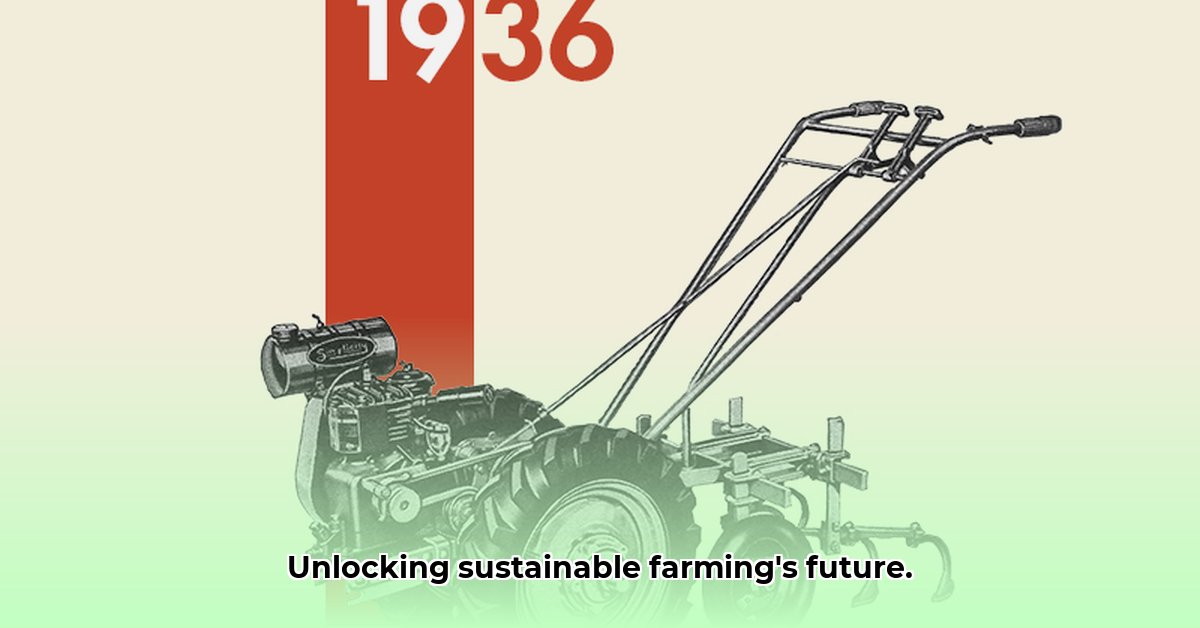
Simplicity Tractor Model Years: A Historical Overview
Simplicity tractors, manufactured since 1937, represent a significant slice of agricultural history. While their potential role in sustainable farming is often implied, a definitive assessment requires a thorough examination of available data, which currently proves insufficient. This article presents a historical overview of Simplicity tractor model years, key ownership transitions, and a critical analysis of their purported contribution to sustainable agriculture. For more information on specific models, see this helpful resource on older Simplicity tractors.
Early Simplicity models, built for rugged reliability, reflected the technological landscape of their time. Ownership changes, notably the periods under Allis-Chalmers and subsequently Briggs & Stratton, significantly influenced production methods, design evolution, and potentially, their environmental impact. However, a comprehensive, publicly available timeline detailing every Simplicity tractor model year remains elusive, hindering a complete understanding of their historical trajectory. This lack of data presents a significant challenge in evaluating their overall sustainability.
Analyzing Sustainability Claims: A Critical Evaluation
The assertion that Simplicity tractors played a substantial role in sustainable agriculture requires rigorous scrutiny. Currently, definitive evidence supporting this claim is lacking. Crucial data points necessary for a comprehensive assessment are missing:
- Fuel Efficiency: Precise fuel consumption data per acre cultivated for each model year is unavailable, making it impossible to assess fuel efficiency relative to contemporary tractors or modern standards.
- Emissions: Data regarding the types and quantities of emissions produced by Simplicity tractors across different model years are not readily available, preventing a comprehensive assessment of their greenhouse gas contribution.
- Lifespan: While anecdotal evidence suggests Simplicity tractors were robust, quantifiable data on their average lifespan is absent, precluding accurate calculations of their environmental footprint over their operational lifetime.
- Materials: Information concerning the materials used in manufacturing Simplicity tractors, their recyclability, and the sustainability of their sourcing is limited, hindering a complete evaluation of their manufacturing impact.
Without this crucial information, any claims about their sustainability remain speculative.
Comparative Data: A Missing Piece of the Puzzle
To properly assess the environmental performance of Simplicity tractors, a comparative analysis against contemporary agricultural machinery is essential. Data comparing fuel efficiency, emissions, and other relevant metrics against competitors such as John Deere or Massey Ferguson are currently unavailable. This lack of comparative data severely limits the ability to contextualize Simplicity's contribution to sustainable agriculture.
Conclusion: A Call for Further Research and Action
In conclusion, while Simplicity tractors hold a place in agricultural history, claims regarding their significant contribution to sustainable farming lack empirical support. The absence of comprehensive data on fuel efficiency, emissions, lifespan, and materials used prevents a definitive assessment. Further research is crucial to fill these substantial knowledge gaps.
To achieve a complete understanding, the following actionable steps are recommended:
- Comprehensive Data Collection: Initiate a collaborative effort to gather data on fuel consumption, emissions, lifespan, and materials used in the manufacturing of Simplicity tractors across all model years. This involves contacting museums, archives, collectors, and historical societies.
- Rigorous Comparative Analysis: Conduct a thorough comparative analysis of the collected data against equivalent data for tractors manufactured by competitors during the same period.
- Life Cycle Assessments (LCAs): Perform comprehensive Life Cycle Assessments on representative Simplicity tractor models to assess their environmental impact across their entire lifecycle, encompassing manufacturing, operation, and disposal.
- Data Standardization and Publication: Develop standardized metrics for evaluating the environmental impact of agricultural machinery and publish the findings in peer-reviewed journals and industry reports.
This concerted effort is necessary to accurately evaluate Simplicity tractors' role in sustainable agriculture, fostering a more informed dialogue about the environmental implications of agricultural machinery throughout history and its evolution towards sustainability.